Hospitals with no patients
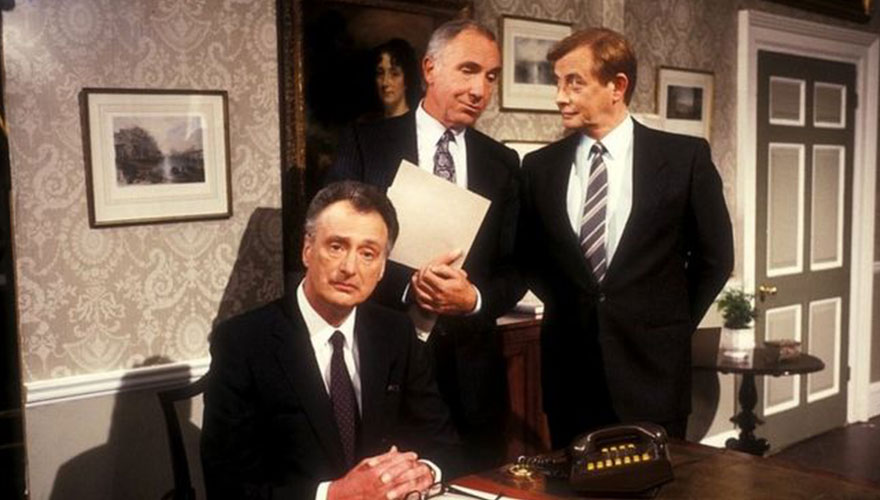
There’s a wonderful episode of the iconic TV series Yes, Minister called ‘The Compassionate Society’. Minister for administrative affairs Jim Hacker is deeply perplexed when he discovers that the brand new St. Edward’s hospital, equipped with the finest medical equipment and over 500 non-medical staff, has no doctors or nurses, and only one patient: the deputy chief administrator of the hospital who fell over a piece of scaffolding and broke his leg.
When questioned on the absurdity of this situation, the marvellously obfuscating Sir Humphrey delivers one of the finest replies from the entire show:
“You talk as if the staff had nothing to do, simply because there are no patients there! There are a large number of extremely busy departments. First, there’s the contingency department, for fires, strikes, air raids, nuclear war, epidemics, food or water poisoning. Then there’s the data and research department who at this moment are conducting a full-scale demographic survey of the catchment area. Then thirdly there’s finance, of course, projected accounts, balance sheets, cash flow budgets. Then there’s the purchasing department, for purchasing medical and other equipment.”
And so it goes on, through the technical department, the building department, maintenance, cleaning and catering, personnel, staff welfare officers, and naturally, a whole host of administrators. All of them are serving their function and doing their jobs, all the while failing, at any stage, to actually treat anybody.
Businesses with no customers
While this is a scathing satire of government bureaucracy and mismanagement that bites as hard now as it did in 1981, there’s a huge truth for marketers and organisations here too. It’s often all too easy for departments to function for themselves and get caught up in their own processes, rather than focus on what they are there to do: serve their customers.
Marketers understand they need to be customer centric – 83 per cent said it was ‘very important’ to them in a recent B2B Marketing survey. But the same survey found that only 27 per cent of organisations had defined KPIs for measuring customer experience. It’s all well and good believing in customer centricity and feeling you are customer-centric, but unless you have a clear idea of what that looks like and the data to measure success or failure, what difference does it make?
The simple fact is, most organisations are not customer-centric because being customer centric is really quite difficult, especially in a large organisation or one which is still moving from a traditional product-focused mindset.
Customers aren’t who they used to be: the digital revolution has ensured that, scuppering old funnel models, complicating the buying cycle, proliferating the number of channels and, most crucially, changing expectations. In terms of customer experience, marketers at B2B firms aren’t in competition with their business rivals; they’re being compared to the best-in-class from B2C: the Ubers, Apples and Amazons of the world. Put bluntly, when it comes to putting customers first, B2B needs to raise its game.
Lack of board-level buy-in
One of the key blockers in the movement towards customer centricity is a lack of commitment at the highest levels of business. New research by PeopleTECH recently revealed that, despite many firms talking about the importance of customer experience, there are relatively few senior roles focusing on this. Only one per cent of FTSE companies have a chief customer officer (or equivalent) on the board, while only a further 15 per cent have someone on the board with a specific customer-focused remit.
Of course, not having a chief customer officer on the board or at a senior management level doesn’t necessarily mean an organisation is not focused on providing a good customer experience. But the lowness of the numbers in the PeopleTECH study is once more indicative of the trend that brands are happy to talk about customer experience but less willing to commit resources to it.
Alternatively, it may be less of a case of willingness, and more of forgetfulness. As Mike Hughes, MD, PeopleTECH, comments: “The customer experience is something that is often overlooked with so many other business priorities to address. That’s why it is so important to have someone in a senior role to make sure that doesn’t happen, to keep reinforcing the importance of customer experience and to communicate the impact that it can have on the bottom line.”
As long as this remains the case, it must be the job of marketers to be the voice of the customer and ensure customer centricity is something the board understands and, more importantly, invests in.
What customer centricity looks like
In our research into the customer journey, we asked marketers to identify what they thought customer centricity meant. Here are the top five answers:
- Driving loyalty through meeting customer needs
- Developing marketing activities according to customer lifecycles
- Personalisation
- Providing consistent multichannel experiences
- Enabling self-guided user journeys.
All of these are undoubtedly facets of customer centricity, but the order of focus suggests marketers still have some way to go in their thinking. Broadly, the top three answers concern things marketers do and want to achieve. The ones towards the bottom are those that really involve seeing the company as the customer sees it and working towards making the relationship as cohesive and mutually beneficial as possible.
The last answer on the list is actually the most important to true customer centricity, and is an area where B2B has an edge on B2C: B2B buyers are self-educators and, famously, get much further along the path to purchase before making contact with a business than previously. Because of the level of information B2B marketers have on their customer segments – or at least should have – their aim should be to make sure customers are educating themselves with their organisation, rather than a competitor. Rather than moving them down a funnel towards a sale, marketers need to give customers what they want: relevant, timely information which is appropriate to their situation. Get that right, and sales are far more likely to follow.